
Vietnam E-Visa Application Process and Requirements: The 2026 Guide
The Vietnam Electronic Visa (E-visa) system has fundamentally streamlined travel to Southeast Asia. In 2026, this digital system is universally available to citizens of all countries and territories, granting up to 90 days of stay with options for both Single and Multiple Entries.
However, the highly automated nature of the immigration portal means there is absolutely zero room for human error. A single typo or a non-compliant photo will result in a rejected application or, worse, being denied boarding at the airport. Whether you are applying from your apartment in Bangkok or planning an international trip from Europe, this guide details the exact requirements and step-by-step process to secure your Vietnam E-visa successfully.
1. Strict 2026 E-Visa Requirements Checklist
Before opening the application portal, gather and verify these three mandatory components:
A. The Passport Scan
Validity: Your passport must be valid for at least 6 months beyond your exact intended arrival date in Vietnam.
Format: You need a high-quality, clear digital scan or photograph of the Bio-Data Page (the page containing your photo and personal details).
The Rule: All four corners of the passport page must be visible. There must be no glare from overhead lighting, and no fingers holding the page down.
B. The Portrait Photo
Vietnamese immigration utilizes strict AI scanning to verify facial biometrics.
Dimensions: 4×6 cm (standard passport size format).
Background: Plain, solid white background only.
The Rule: You must look straight at the camera. Strictly NO glasses (even prescription glasses must be completely removed). No smiling. Do not upload the exact same photo printed on your passport bio-page unless your passport was issued within the last few weeks; the AI will flag it as an outdated photo.
C. Payment Method

Vietnam E-Visa Application Process and Requirements: The 2026 Guide
A valid international credit or debit card (Visa, Mastercard, JCB) to pay the non-refundable government fee ($25 USD for a Single Entry, $50 USD for a Multiple Entry).
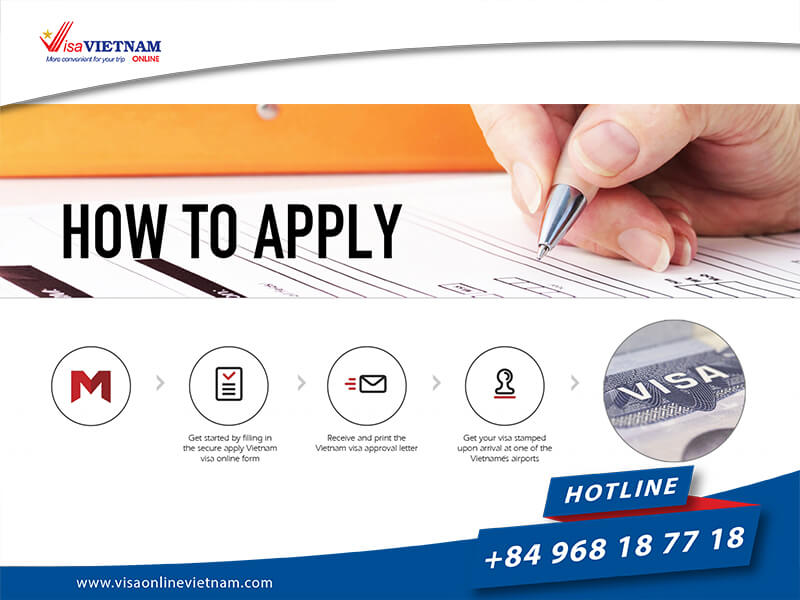
2. The Step-by-Step Application Process
Follow these steps meticulously to ensure your application passes the initial screening:
Access the Portal: Go to the official Vietnam Immigration Department E-visa portal or use a trusted agency for guided assistance.
Upload Documents: Upload your compliant digital portrait photo and your passport bio-page scan.
Fill in the Data: This is the most critical step. Enter your Full Name, Date of Birth, Nationality, and Passport Number exactly as they appear on your travel document.
Select Your Itinerary: Choose your intended entry date, exit date, and your specific Port of Entry and Exit.
Review and Pay: Double-check every single letter and number. Pay the processing fee. You will receive a Registration Code (save this code to check your status later).
Download and Print: After 3 to 5 business days, check the portal. If approved, download the PDF. You must print a physical copy of this E-visa to present to airline staff and immigration officers.
3. Fatal Application Errors to Avoid (The “Typo Traps”)
Thousands of travelers are denied boarding every week due to these common, easily avoidable mistakes:
The MRZ Mismatch: Your name on the application MUST perfectly match the Machine Readable Zone (the two lines of text with
<<<<at the bottom of your passport page). If your MRZ includes your full middle name, it must be on the application.Port of Entry Lock: E-visas are strictly port-specific. If you select “Tan Son Nhat Airport (Ho Chi Minh City)” on your application, you cannot change your mind and fly into “Noi Bai Airport (Hanoi)”. The airline will deny your boarding.
Date Confusion: Vietnam uses the DD/MM/YYYY format. Travelers from the US frequently mix up the month and day, leading to entirely invalid entry dates.
4. Essential Tips for Applicants in Thailand
Since many travelers apply for the Vietnam E-visa while residing in or traveling through Thailand, there are specific regional factors you must account for to ensure a smooth journey:
The “Visa Run” Border Selection: If you are based in Bangkok or Chiang Mai and planning a visa run to Vietnam, your mode of transport dictates your E-visa application. If flying from Suvarnabhumi (BKK) or Don Mueang (DMK), select the correct destination airport. However, if you are taking a bus overland through Cambodia (via Poipet/Aranyaprathet), you MUST select the exact land border checkpoint (e.g., Moc Bai Landport). An E-visa issued for an airport cannot be used at a land border, and vice versa.
Payment & Currency Conversion: The $25 or $50 government fee is processed strictly in US Dollars (USD). If you are paying with a Thai bank card (such as Kasikorn, SCB, or Bangkok Bank), the transaction will go through, but your bank will apply the daily THB to USD exchange rate plus a small foreign transaction fee.
Printing in Thailand: Airlines operating out of Thailand (like Thai AirAsia, VietJet, and Thai Airways) strictly enforce the physical document rule. Do not rely on showing the E-visa PDF on your smartphone screen. Always print a physical copy at your hotel, a local 7-Eleven with printing services, or an airport kiosk before approaching the check-in counter.
5. Timelines, Holidays & Emergency Alternatives
Standard Processing Time: 3 to 5 full business days.
2026 Holiday Warning: The Immigration Department completely halts processing on weekends and Vietnamese public holidays. As we navigate the Thai Songkran festival (mid-April) and approach Vietnam’s massive Reunification Day & Labor Day holidays (April 30 – May 1), the E-visa system will face severe backlogs. Applications submitted during these peak periods will be significantly delayed.
What if I make a mistake or run out of time? If your flight is approaching and your E-visa is delayed, or you realize you made a typo, you cannot edit a submitted E-visa. Your only practical solution is to use an Emergency Visa on Arrival (VOA) Service.
Expedited VOA services can secure a new Visa Approval Letter in 1 to 4 working hours, utilizing VIP consular channels to bypass the standard queue and ensure you make your flight.
6. Frequently Asked Questions (FAQ)
Q: Can I apply for the E-visa if I am entering Vietnam by bus from Thailand via Cambodia? A: Yes. The E-visa is valid for air, land, and sea borders. However, you must know the exact name of the land border checkpoint (e.g., Moc Bai) and select it correctly on your application.
Q: Will I get a refund if my E-visa is rejected due to a photo error? A: No. The government processing fee is strictly non-refundable, regardless of whether your visa is approved or denied. You will have to pay again to submit a new application.
Q: Can I extend my 90-day E-visa without leaving Vietnam? A: In 2026, in-country tourist visa extensions are generally not permitted. To renew your 90 days, you must perform a “visa run” by exiting Vietnam (e.g., a quick flight back to Bangkok) and re-entering with a newly approved E-visa.




Hello
We are travelling to Brisbane, Australia from Bangkok, Thailand on the 4th August. We arrive on Thai Vietjet
Flight no: VZ974 at 7.55am and leave on Thai Vietjet
Flight no: VJ83 at 10.50am the same day.
We are advised we need to apply for a transit visa. Could you please advise for which visa we should apply nd how to do so online, or would it be quicker to come into your embassy in Bangkok and obtain one?
Thank You
Colin and Jan Andersen